
How can you choose the right steel block for your project?
Choosing the most suitable steel block for an engineering project is like finding the heart component for a precision watch. The decision-making process must be based on a balance between strict technical parameters and economic benefits. According to the ASTM A36 standard of the American Society for Testing and Materials, the yield strength of common structural steel blocks needs to reach 250 megapascals, while the ASTM A572 Grade 50 steel blocks used in bridge construction require a yield strength of no less than 345 megapascals. This means that under the same load, the latter can reduce the material usage by approximately 20%. A 2023 survey of the heavy machinery manufacturing industry revealed that 45% of the failure cases caused by incorrect material selection were due to mismatched strength grades, resulting in an average direct economic loss of approximately $120,000 per failure. Therefore, in the early stage of the project, engineers must precisely calculate the static load and dynamic fatigue cycle that the components need to withstand. For instance, for a hydraulic press bracket with an expected lifespan of one million cycles, steel block materials with a fatigue limit higher than 300 megapascals should be selected.
Chemical composition is the core element determining the performance of steel blocks, and the percentage deviation of trace elements can cause significant quality fluctuations. For instance, P20 pre-hardened steel used in mold manufacturing typically has a carbon content controlled between 0.28% and 0.40%, and a chromium content ranging from 1.40% to 2.00%. This formula ensures that the hardness remains stable at HRC 30-36 without the need for secondary heat treatment, reducing the processing cycle by approximately 15%. In contrast, if the project involves a low-temperature environment (such as Arctic equipment at -46 degrees Celsius), low-temperature nickel steel with a nickel content of 3.5% should be selected. Its impact energy can reach over 27 joules, and the brittle transition temperature is reduced to below -60 degrees Celsius. A well-known case is the successful application of Caterpillar in polar mining equipment. By specifying specific grades of steel blocks, the failure rate of its key components was reduced by 7% within five years.
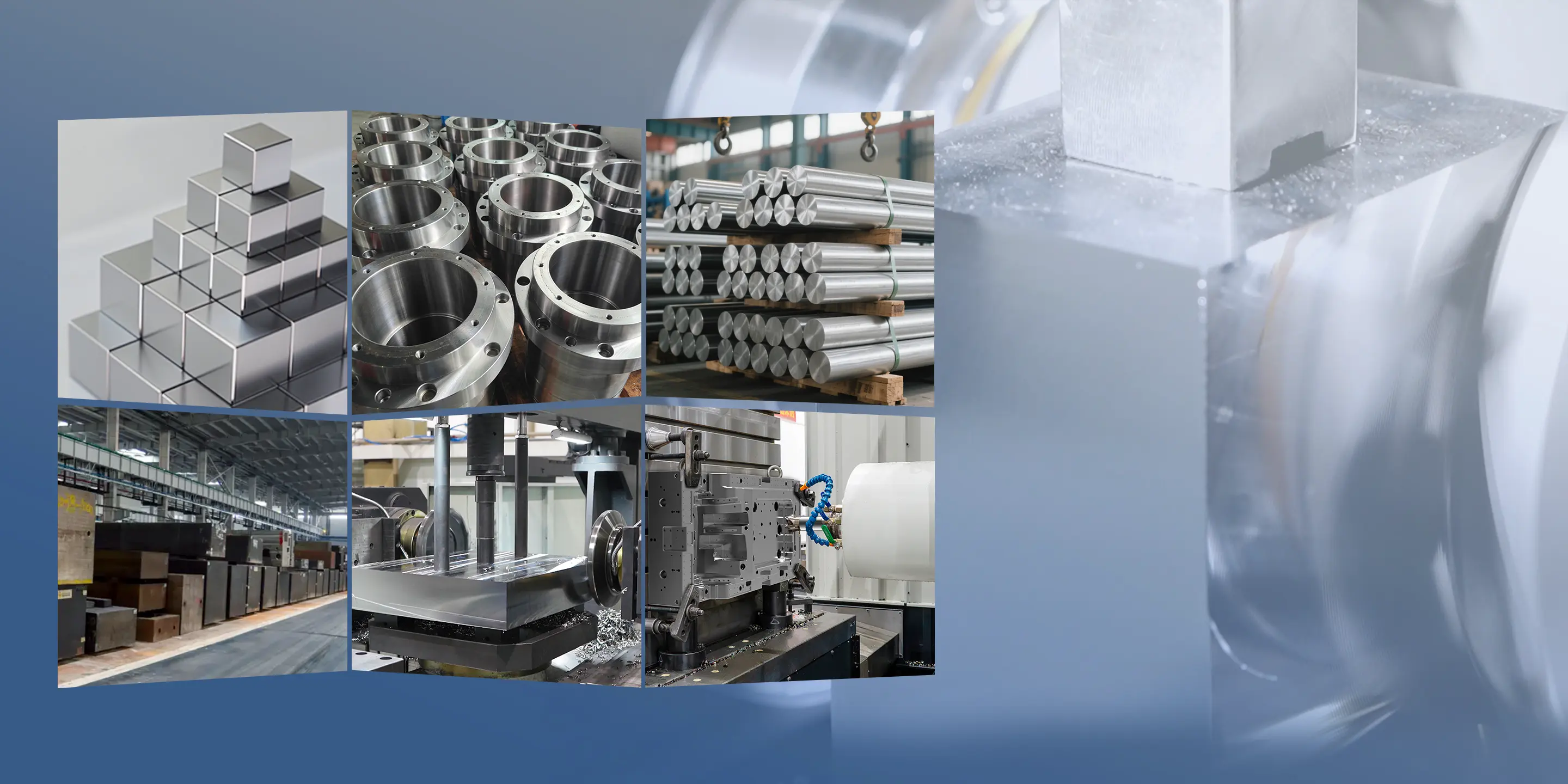 Dimensional accuracy is as indispensable as internal quality. In the aerospace field, high-strength steel blocks used for landing gear not only require a length tolerance controlled within ±0.1 millimeters, but also need to be inspected by ultrasonic flaw detection to ensure that internal defects are less than φ0.8 millimeters equivalent flat-bottom holes. Studies show that for steel block that are continuously cast and undergo secondary refining, the grades of sulfide and oxide inclusions can be controlled below grade 1.5 (based on ASTM E45 standard), which will increase the high-cycle fatigue strength by more than 15%. From the perspective of supply chain risk management, choosing suppliers that have passed ISO 9001 quality management system certification and specific industry certifications (such as classification society certification) can reduce the probability of batch material nonconformity from a potential average of 5% to less than 0.5%.
Ultimately, the decision-making balance will tip towards the option with the highest cost-effectiveness throughout its entire life cycle. Although the initial purchase price of high-specification alloy steel blocks may be 30% to 50% higher than that of ordinary carbon steel, their longer service life (possibly extended by 2 to 3 times) and lower maintenance frequency (maintenance costs can be reduced by 40%) often bring better return on investment. For instance, in the field of wind power generation, Vestas upgraded the steel blocks used in the main shafts of its turbines. Although the cost per piece increased by $8,000, it is expected that within a 20-year design life, the net present value benefit will increase by approximately $180,000 due to the reduction of two unplanned shutdowns. Therefore, a comprehensive assessment of the initial budget, operating costs, risk probability and final benefits is a strategic step in selecting that "destined" steel block.
Dimensional accuracy is as indispensable as internal quality. In the aerospace field, high-strength steel blocks used for landing gear not only require a length tolerance controlled within ±0.1 millimeters, but also need to be inspected by ultrasonic flaw detection to ensure that internal defects are less than φ0.8 millimeters equivalent flat-bottom holes. Studies show that for steel block that are continuously cast and undergo secondary refining, the grades of sulfide and oxide inclusions can be controlled below grade 1.5 (based on ASTM E45 standard), which will increase the high-cycle fatigue strength by more than 15%. From the perspective of supply chain risk management, choosing suppliers that have passed ISO 9001 quality management system certification and specific industry certifications (such as classification society certification) can reduce the probability of batch material nonconformity from a potential average of 5% to less than 0.5%.
Ultimately, the decision-making balance will tip towards the option with the highest cost-effectiveness throughout its entire life cycle. Although the initial purchase price of high-specification alloy steel blocks may be 30% to 50% higher than that of ordinary carbon steel, their longer service life (possibly extended by 2 to 3 times) and lower maintenance frequency (maintenance costs can be reduced by 40%) often bring better return on investment. For instance, in the field of wind power generation, Vestas upgraded the steel blocks used in the main shafts of its turbines. Although the cost per piece increased by $8,000, it is expected that within a 20-year design life, the net present value benefit will increase by approximately $180,000 due to the reduction of two unplanned shutdowns. Therefore, a comprehensive assessment of the initial budget, operating costs, risk probability and final benefits is a strategic step in selecting that "destined" steel block.
Dimensional accuracy is as indispensable as internal quality. In the aerospace field, high-strength steel blocks used for landing gear not only require a length tolerance controlled within ±0.1 millimeters, but also need to be inspected by ultrasonic flaw detection to ensure that internal defects are less than φ0.8 millimeters equivalent flat-bottom holes. Studies show that for steel block that are continuously cast and undergo secondary refining, the grades of sulfide and oxide inclusions can be controlled below grade 1.5 (based on ASTM E45 standard), which will increase the high-cycle fatigue strength by more than 15%. From the perspective of supply chain risk management, choosing suppliers that have passed ISO 9001 quality management system certification and specific industry certifications (such as classification society certification) can reduce the probability of batch material nonconformity from a potential average of 5% to less than 0.5%.
Ultimately, the decision-making balance will tip towards the option with the highest cost-effectiveness throughout its entire life cycle. Although the initial purchase price of high-specification alloy steel blocks may be 30% to 50% higher than that of ordinary carbon steel, their longer service life (possibly extended by 2 to 3 times) and lower maintenance frequency (maintenance costs can be reduced by 40%) often bring better return on investment. For instance, in the field of wind power generation, Vestas upgraded the steel blocks used in the main shafts of its turbines. Although the cost per piece increased by $8,000, it is expected that within a 20-year design life, the net present value benefit will increase by approximately $180,000 due to the reduction of two unplanned shutdowns. Therefore, a comprehensive assessment of the initial budget, operating costs, risk probability and final benefits is a strategic step in selecting that "destined" steel block.